
Written by SArah

Subscribe to Sarah’s Substack
Written by Sarah
“Rewiring the Mind for Planetary Well-being” for One Earth Sangha on July 8, 2024
“Optimism is a key weapon against climate change” for Institute of Art and Ideas on March 5, 2024
“There Is No ‘I’ in the Climate Crisis” for Zocalo Public Square on June 1, 2023
“Lessons from a Hermit Thrush” for One Earth Sangha on May 1, 2023
“Avoiding the Urgency Trap: Slowing Down for Climate Justice” for Missouri Gateway Green Building Council on February 2, 2023
“Avoiding the Urgency Trap: Slowing Down for Climate Justice” for The Healthy Planet on January 31, 2023
“Doing Nothing for the Planet” for One Earth Sangha on September 6, 2022
“Overwhelmed by Climate Change? Try Re-Framing Your Impact” for PBS SoCal on April 22, 2022
“Who feels climate anxiety?” for The Cairo Review of Global Affairs in Fall 2021
“Is Climate anxiety bad for the planet?” for Los Angeles Times on June 29, 2021
“Climate Anxiety Is an Overwhelmingly White Phenomenon” for Scientific American on March 21, 2021
“Generation Z is ‘traumatized’ by climate change—and they’re the key to fighting it” for Fortune on August 19, 2020
“The New Faces of Climate Justice for Zocalo Public Square on July 22, 2020
“Climate Change is Scary: Here are 7 Tools to Help You Keep Your Cool on a Warming Planet” for Resilince.org on February 5, 2020
“Youth Struck” for North Coast Journal on April 18, 2019
“The Power of a Picnic Table: How the Environmental Humanities Shaped A Field Guide to Climate Anxiety” for The Association for the Study of Literature and Environment on April 2020
“You Got This: Coping with Coronavirus Anxiety.” for University of California Press on March 19, 2020
“Gen Z: The Climate Generation.” for University of California Press on February 11, 2020
“Writing Latinx Environmentalisms.” (co-written) Temple University Press Blog. November 20, 2019
“Climate Change is Changing What it Means to Be an Environmental Steward.” Post written for University of California Press blog
Co-author, Guidelines for Bringing Undergraduates to Association for the Study of Literature and Environment conferences.
Co-author, Accessibility Guidelines for presenting and attending at the Association for the Study of Literature and Environment conferences. 2016.
Scholarly Publications
“Can a Green University Serve Underrepresented Students? Reconciling Sustainability and Diversity at Humboldt State University.” Sustainable Futures Speaker Series lecture published in Humboldt Journal of Social Relations, special issue on “Diversity and Social Justice in Higher Education.” 2017
“Environmental Justice, Vital Materiality, and the Toxic Sublime in Edward Burtynsky’s Manufactured Landscapes.” GeoHumanities 2:1 (May 13, 2016). 203-219.
“Nature Writing and the American West.” Cambridge University Volume on American Literature, edited by Susan Kollin. Cambridge UP. 2015
“Rub Trees, Webcams, and GIS: The Wired Wilderness of Leanne Allison and Jeremy
Mendes’ Bear 71.” Green Letters special issue on “Digital Environments and Virtual Worlds.” 2014
“Normalcy, Knowledge, and Nature in Mark Haddon’s The Curious Incident of the Dog in the Night-Time.” Disability Studies Quarterly 33:3. 2013
“Environmental Justice, Transnationalism, and the Politics of the Local in Leslie Marmon Silko’s Almanac of the Dead.” The Journal of Transnational American Studies 5:1. 2013
“Teaching Jamaica Kincaid’s ‘In History’ as Environmental Justice Literature.” Colors of Nature: Identity, Culture, and the Natural World Online Teaching Resource. 2013
“How Many Mothers Does it Take to Change All the Light Bulbs?: The Myth of Green Motherhood.” Journal of the Motherhood Initiative 2:1 (August, 2011). 81-101.
“Endangering the Desert: Immigration, the Environment, and Security in the Arizona-Mexico Borderland.” ISLE: Interdisciplinary Studies in Literature and Environment 17:4 (Winter, 2010). 709-734.
Contributed to
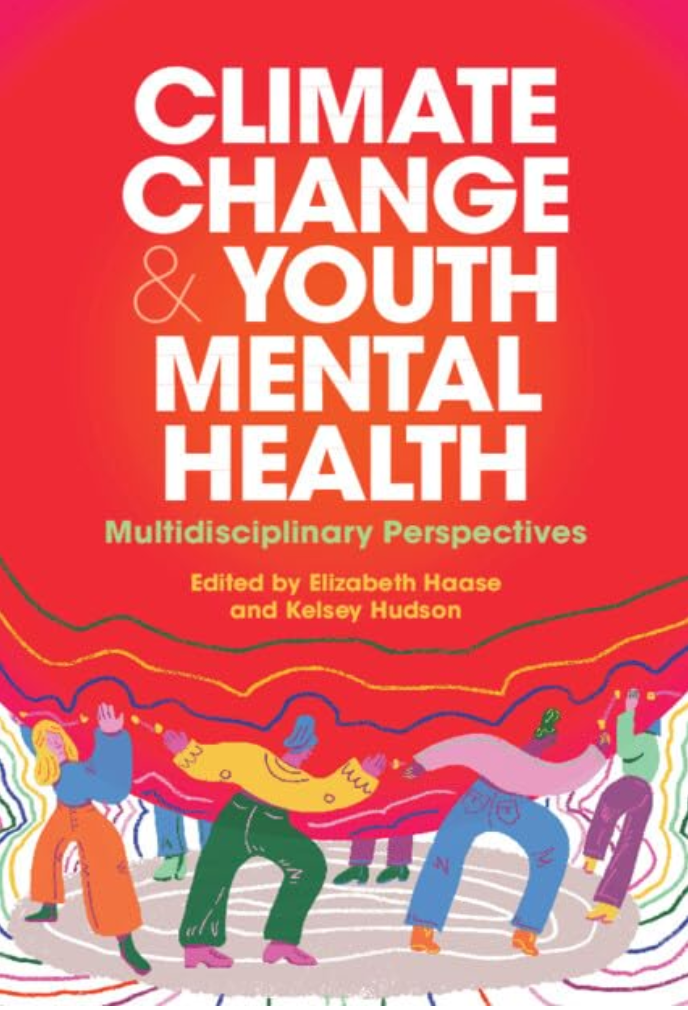
“Future Directions: Youth Climate Distress and Climate Justice”
In Climate Change & Youth Mental Health
Climate change is the biggest threat of our century, one that will impact every aspect of children’s lives: their physical, emotional, moral, financial, and social health and well-being. The relationship between the climate crisis and mental health in young people is therefore by definition multi-disciplinary and multi-cultural, requiring multiple perspectives on how to understand and guide younger generations. This book provides a unique synthesis of those perspectives – the science, psychology, and social forces that can be brought to bear on supporting young people’s psychological well-being. No matter the setting in which an adult may interact with younger people, this book provides the intellectual rigor and tools to ensure those interactions are as helpful and supportive as they can be.

“Afterword: The Urgency of Slow Teaching”
In Teaching the Literature of Climate Change
Over the past several decades, writers such as Margaret Atwood, Paolo Bacigalupi, Octavia E. Butler, and Kathy Jetn̄il-Kijiner have explored climate change through literature, reflecting current anxieties about humans’ impact on the planet. Emphasizing the importance of interdisciplinarity, this volume embraces literature as a means to cultivate students’ understanding of the ongoing climate crisis, ethics in times of disaster, and the intrinsic intersectionality of environmental issues.
Contributors discuss speculative climate futures, the Anthropocene, postcolonialism, climate anxiety, and the usefulness of storytelling in engaging with catastrophe. The essays offer approaches to teaching interdisciplinary and cross-listed courses, including strategies for team-teaching across disciplines and for building connections between humanities majors and STEM majors. The volume concludes with essays that explore ways to address grief and to contemplate a hopeful future in the face of apocalyptic predictions.

“Coming of Age at the End of the World: The Affective Arc of Environmental Studies Curricula.”
In Affective Ecocriticism: Emotion, Embodiment, Environment
Scholars of ecocriticism have long tried to articulate emotional relationships to environments. Only recently, however, have they begun to draw on the complex interdisciplinary body of research known as affect theory. Affective Ecocriticism takes as its premise that ecocritical scholarship has much to gain from the rich work on affect and emotion happening within social and cultural theory, geography, psychology, philosophy, queer theory, feminist theory, narratology, and neuroscience, among others. This vibrant and important volume imagines a more affective—and consequently more effective—ecocriticism, as well as a more environmentally attuned affect studies.

“Why Do Nothing When the Planet Needs Us Most?”
In Solastalgia: An Anthology of Emotion in a Disappearing World
“One of the penalties of an ecological education,” wrote Aldo Leopold, “is that one lives alone in a world of wounds.” As climate change and other environmental degradations become more evident, experts predict that an increasing number of people will suffer emotional and psychological distress as a result. Many are feeling these effects already. In the pages of Solastalgia, they will find a source of companionship, inspiration, and advice.
The concept of solastalgia comes from the Australian philosopher Glenn Albrecht, who describes it as “the homesickness we feel while still at home.” It’s the pain and longing we feel as we realize the world immediately around us is changing, with our love for that world serving as a catalyst for action on its behalf.
This powerful anthology brings together thirty-four writers—educators, journalists, poets, and scientists—to share their emotions in the face of environmental crisis. They share their solastalgia, their beloved places, their vulnerability, their stories, their vision of what we can create.
 Sarah Jaquette Ray